
Exhibition Image Sources and Usage Rights
An exhibition concept can look coherent while its image trail remains incomplete. A reference photograph may have no recorded creator, a render may have been supplied for one review stage, and a completed-project photograph may sit in a shared folder without a clear record of its reuse context.
That gap becomes visible when images move between mood boards, design decks, client presentations, supplier packages, organizer submissions, websites, social posts, and production files. The image may look unchanged while its audience, channel, territory, duration, edit, or intended use has changed.
An exhibition image rights workflow helps the project team preserve what is known, label what remains uncertain, and route the next question to the appropriate person. It does not turn a source record into a legal determination or establish permission for a new use.
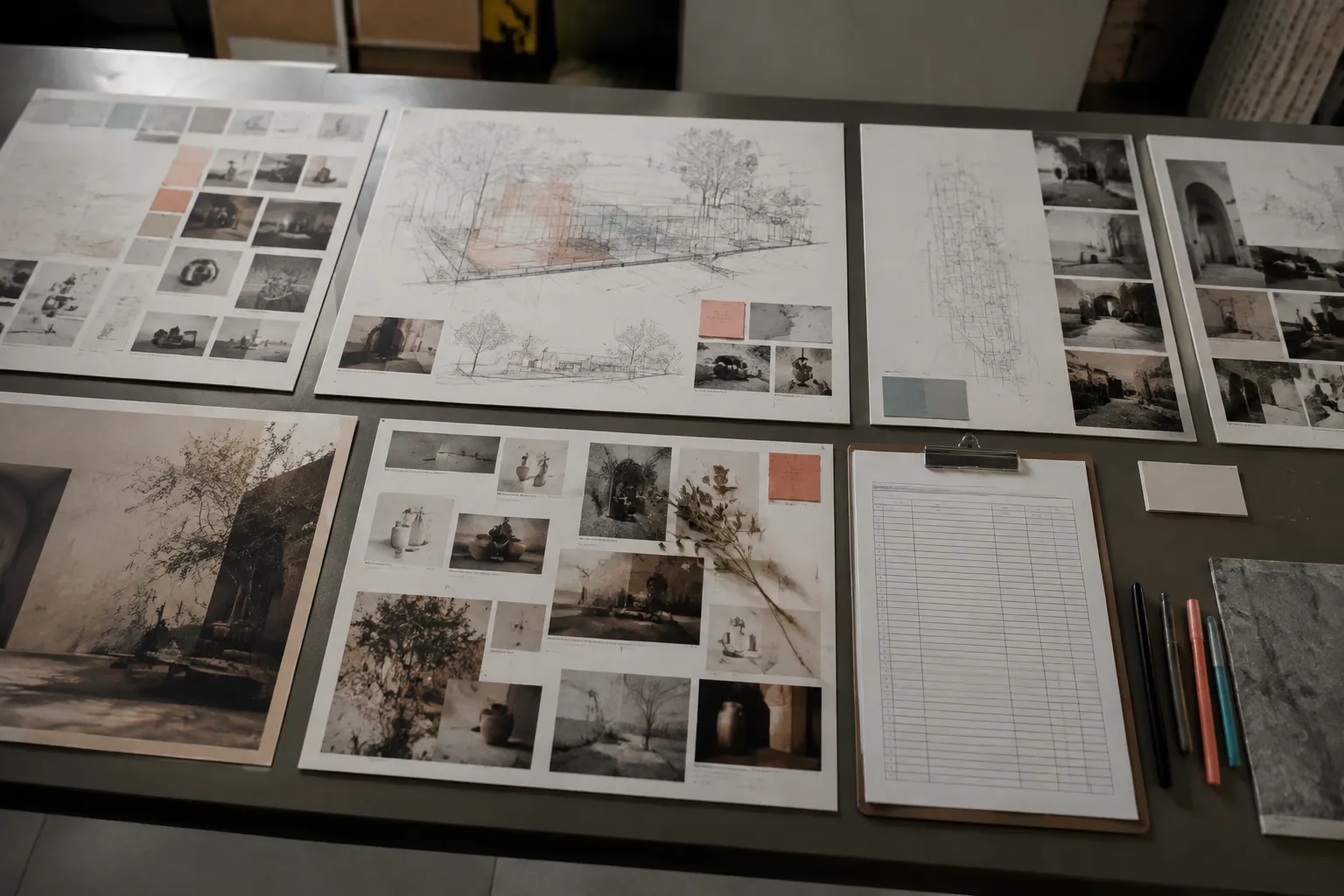
What Exhibition Image Rights Include
For an exhibition team, image rights are best handled as a connected record of source tracing, permission-status information, intended use, attribution, reuse changes, and handoff ownership.
The image is only one part of that record. The team should also be able to identify:
- where the image came from and who supplied it;
- whether it is a reference image, render, walkthrough frame, project photograph, or proposed exhibition artwork;
- which creator, photographer, agency, supplier, rights holder, or licensing provider may need to be contacted;
- what permission or license information has actually been recorded;
- what use was originally intended and what use is now proposed;
- which credit or attribution details should travel with the asset;
- what is unknown; and
- who owns the next review question.
A source record supports a clearer project conversation. It does not answer a rights question that belongs with the relevant rights holder, licensing provider, organizer, supplier, or qualified adviser.
| Project material | What it can show | What it does not establish |
|---|---|---|
| Reference image | A visual direction, material cue, spatial relationship, or approach idea | Permission to reproduce it in exhibition, promotional, or published material |
| Render or walkthrough frame | A proposed concept, sightline, zone relationship, or graphic placement | Final design approval, production status, or documented rights for every visible image or graphic |
| Project photograph | A documented installation or built result from a particular viewpoint | Automatic permission for a new campaign, channel, territory, or edit |
| Source record | Known origin, creator information, delivery context, and open questions | A final legal conclusion |
| Permission or license record | Recorded terms or authorization information for a defined context | Permission beyond the documented scope |
| Handoff package | Asset identity, status, credits, restrictions, and unresolved dependencies | Resolution of questions still assigned to another party |
Build an Exhibition Image Source Record
Every image entering an exhibition project should have an identifiable source record, even when its first use is only internal. The record can begin simply and become more detailed as the asset moves toward public circulation or production handoff.
A useful record may contain:
- asset name or internal identifier;
- file location or approved repository reference;
- image category;
- source or supplying party;
- creator, photographer, studio, or agency, when known;
- original source page or delivery context, where available;
- date received or created;
- project, campaign, or concept board where it first appeared;
- permission-status label;
- intended-use statement;
- credit or attribution information;
- license, contract, or permission document reference, when available;
- known restrictions or conditions;
- review date for changeable information;
- unresolved notes; and
- the owner of the next question.
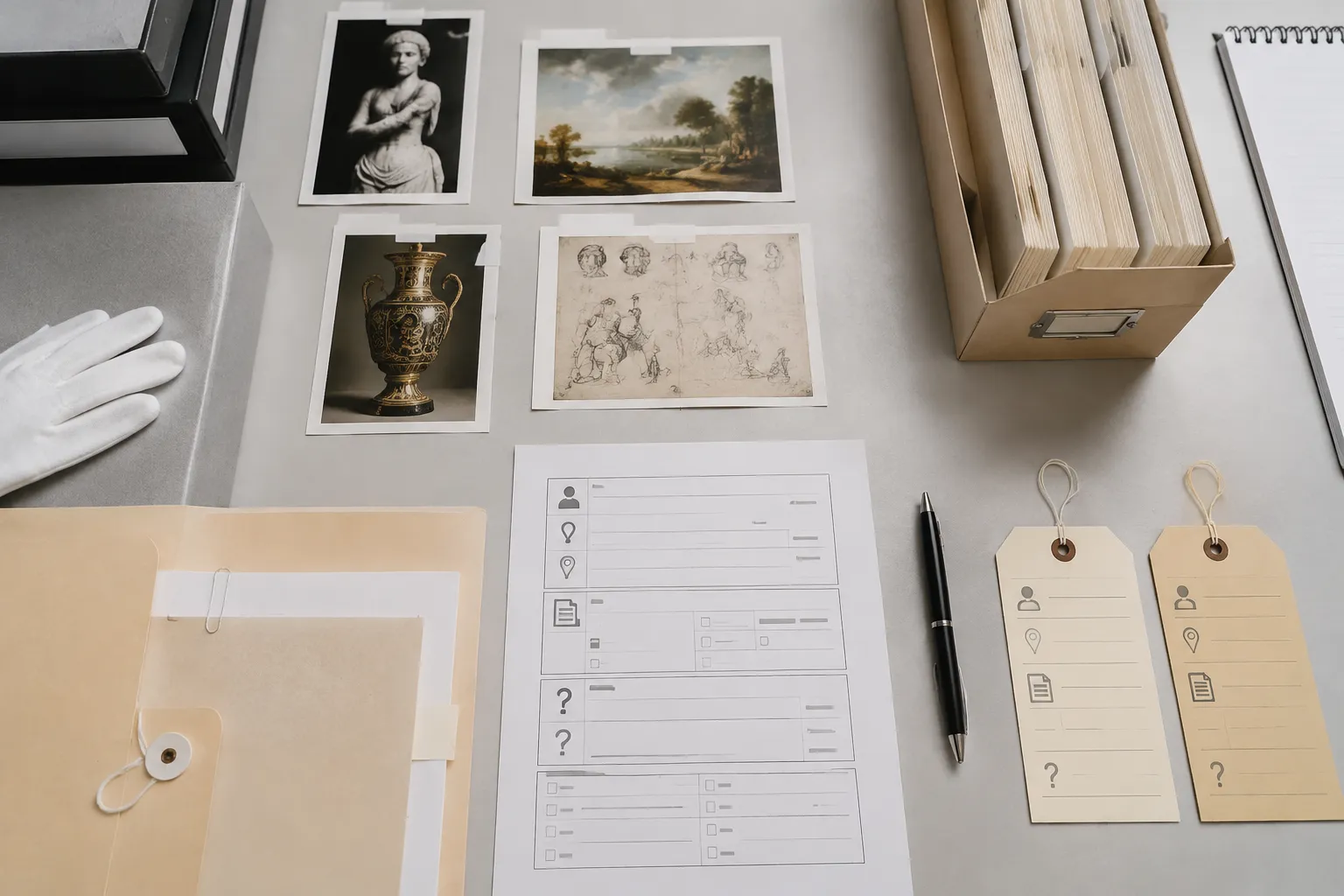
The record should separate facts from assumptions. “Supplied by the design agency” is different from “owned by the design agency.” “Used in an internal concept review” is different from “approved for public display.” “Photographer unknown” is different from “no rights holder exists.”
Source identified: no permission record attached. Current use: internal concept review only. Further use requires review by the assigned project contact.
This wording describes the project state without implying a conclusion that the record cannot support.
The Minimum Useful Source Trail
A receiving team should be able to answer four questions quickly:
- What is this image?
- Where did it come from?
- What use is currently documented?
- What still needs to be checked?
For a reference image, the trail may include the original creator or publisher, the person who introduced it, the date it entered the project, and the design decision it supports. For a commissioned render, it may connect the frame to the brief, designer, agency, or supplier that produced it. For project photography, it may preserve the photographer, assignment context, event or project, delivered files, and recorded terms.
The detail should grow with the asset's visibility. An image used to discuss a material direction follows a different review path from one planned for an exhibition wall, website, campaign board, or paid promotion. The source trail should make that change visible.
Separate Image Types Before Review
Different image types are often placed in the same presentation or folder, even though they raise different source and handoff questions. Separating them at intake gives the team a clearer visual and administrative review path.
| Image type | Useful project reading | Record to preserve |
|---|---|---|
| Reference image | Material combination, spatial arrangement, lighting direction, visitor approach, meeting-zone relationship, graphic hierarchy, or display idea | Original source, person who introduced it, date added, visual purpose, and whether it is for reference only |
| Render or walkthrough frame | Proposed sightline, zone threshold, focal point, graphic placement, or concept sequence | Project, design stage, responsible creator or supplier, delivery context, and review status |
| Completed-project photography | Built result and documented installation view from a particular approach angle | Photographer or supplying party, project and event context, date when known, intended application, and recorded terms |
A reference image is evidence of the idea it depicts. It is not evidence that the same image can be reproduced in public-facing exhibition material.
A render may communicate a sightline or zone relationship clearly while leaving other matters unresolved. It should not be treated as a complete specification or as proof that every visible image, logo, texture, or graphic has a documented source.
A project photograph appears to document a real installation, but a later campaign may crop it differently, place it beside other brands, use it in another territory, or distribute it through a new channel. Those changes create a new question for the relevant project or rights contact.
Record Permission Status and Intended Use
A permission-status record should describe the information available for a specific proposed use. A short label should not imply more certainty than the supporting record provides.
| Status wording | What it communicates |
|---|---|
| Source recorded; permission status not reviewed | The origin is documented, but the proposed use has not yet been assessed by the responsible party. |
| Permission information requested | A question has been sent to the relevant contact and no supporting response is recorded yet. |
| Permission information received; scope under review | Information exists, but its relationship to the proposed use still needs confirmation. |
| Credit information recorded; permission status unresolved | Attribution details are available, while the use question remains open. |
| Internal concept review only pending confirmation | The asset is being limited to a defined review context while the next question is assigned. |
| Unknown source; do not circulate externally | The project has insufficient source information for external distribution. |
| Recorded approval for the documented use | The project file contains an approval record tied to a stated use and responsible authority; it does not imply broader permission. |
“Permission received” is incomplete without the use context. The record may need to distinguish internal review, client presentation, designer or supplier handoff, organizer submission, exhibition display, printed collateral, website publication, social promotion, paid advertising, press distribution, and future portfolio use.
An intended-use statement should explain who will see the image, where it will appear, whether it is a reference or a reproduced work, whether it will be cropped or edited, and whether it will be sent to an agency, supplier, organizer, or production partner. Territory and duration may also matter to the review.
Reference image for internal concept comparison during the booth briefing stage. No external distribution recorded.
Completed-project photograph proposed for a public case study and supplier presentation. Photographer and reuse terms require confirmation.
These statements keep two project questions separate: does the image communicate the intended visual idea, and has the proposed use been documented sufficiently for the responsible review?
Review Reuse, Credits, and Handoffs
An image may pass through several contexts during one exhibition project. Record the change instead of assuming that the original use continues unchanged.
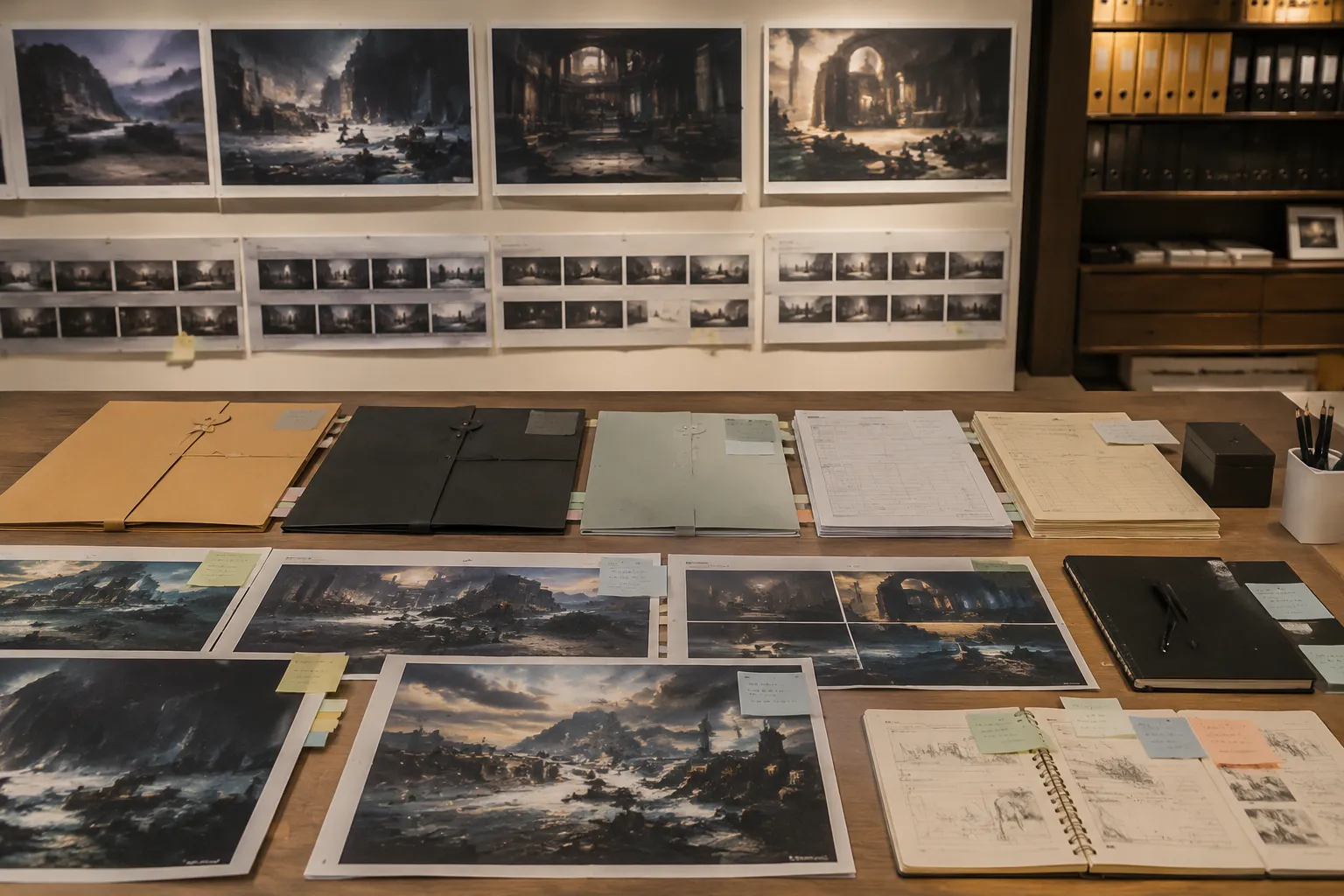
Compare the current record with the proposed use across:
- audience and channel;
- territory and duration, where relevant;
- crop, edit, added text, or added branding;
- commercial or promotional setting;
- relationship to other images;
- resolution or delivery format; and
- new agency, supplier, organizer, or production recipient.
A reference image used privately to discuss a curved counter is different from the same image placed in a public campaign board. A render used in a client review is different from one distributed to an organizer. A project photograph used in an event recap is different from one reused in paid promotion.
Original record covers design review. Proposed use has changed to public website publication. Confirm source, credit, and permission scope before release.
The change itself does not answer the rights question. It identifies where a new question begins and who needs to review it.
Keep Credit Information With the Asset
Credit information is easily separated from an image when files are copied between decks and folders. Keep available details with the asset record:
- creator or photographer;
- studio, agency, or supplying organization;
- work title or project name, where relevant;
- source or collection name;
- required credit wording and placement, when specified;
- permission or license record reference;
- restrictions or attribution conditions; and
- date the credit information was last checked.
A credit line is not a substitute for permission information. The absence of a credit line does not establish that no credit is needed. The record should show what has been documented and what still needs confirmation.
Make the Handoff Readable
An agency or supplier handoff should let the receiving team see the image's status without reconstructing its origin from an old presentation. For each asset, include:
- asset identifier and preview;
- image category and source status;
- creator or supplier information;
- intended use;
- permission-status label;
- credit instruction;
- supporting document reference;
- known restrictions;
- open question;
- assigned owner; and
- required review stage.
Distinguish “for visual reference” from “for reproduction.” State whether the receiving team may edit, crop, publish, print, or pass the image to another party. Unknown details should remain visible.
Use as a reference for material proportion only. Do not place in public-facing artwork. Source and reuse status remain unresolved.
When the Image Source Is Unknown
An unknown image source is an unresolved project state, not a conclusion about the image's legal status.
Preserve the asset and its context first. Record where it was found, who introduced it, when it entered the project, and what visual decision it currently supports. Do not rename it as “stock,” “free,” “public,” or “approved” without supporting information.

Then record the checks already attempted. Depending on the project, this may include asking the person who supplied the image, reviewing the original delivery folder, checking the design brief, locating a credit line, or contacting an apparent source. The record should state both what was checked and what remains unknown.
The operational route may be to:
- replace the asset with an image whose source is documented;
- keep it for internal concept discussion only;
- request source or permission information;
- escalate the question to the rights holder or licensing provider;
- ask the organizer or appointed adviser about the relevant use context; or
- hold the asset out of external circulation until the status is resolved.
The practical aim is to prevent uncertainty from disappearing when a file is copied into a new deck, supplier package, organizer submission, or production folder.
A Root-Level Review Path
Use the following sequence to keep visual review and source review connected without treating either one as a final approval.
- Identify the visual role. Classify the image as a reference, render, walkthrough frame, completed-project photograph, or proposed exhibition artwork.
- Inspect the source trail. Identify the creator, photographer, supplier, agency, collection, or original delivery context. Mark unknown fields explicitly.
- State the intended use. Record who will see the image, where it will appear, and whether the use is internal, public, promotional, printed, digital, or production-related.
- Compare proposed reuse. Check whether the audience, channel, territory, duration, edit, or receiving team has changed.
- Preserve credit information. Attach available creator and credit details to the asset record. Keep attribution separate from permission documentation.
- Assign the open question. Name the rights holder, licensing provider, photographer, agency, supplier, organizer, or qualified adviser who should review it.
- Carry the status forward. Pass the same status and open questions into the next deck, board, handoff, or production package.
This path lets a team discuss what the image communicates from the visitor view while keeping source, reuse, and approval questions in their proper lane.
Common Misreadings
| Misreading | More useful project reading |
|---|---|
| “It was found online, so it is available.” | Online visibility identifies a discovery path, not a documented use status. Preserve the source and record the proposed use. |
| “The designer supplied it, so the project can reuse it.” | Supply and ownership are different records. Ask what was supplied and whether the new use has been documented. |
| “It was used in an earlier deck, so the same use continues.” | Compare the earlier review context with the new audience, channel, edit, and distribution path. |
| “Adding a credit makes the use acceptable.” | Credit preserves attribution information; it does not replace the relevant permission or license record. |
| “It is only a reference, so no record is needed.” | Reference images influence briefs and later design decisions. A source trail reduces the chance of accidental reproduction during handoff. |
| “Unknown means unusable forever.” | Unknown means the project has an open question. The route may be to obtain information, replace the asset, limit its use, or escalate it. |
Sources and Evidence Boundary
The following sources describe rights metadata, digital asset management, and institutional documentation practices. They support the value of recording provenance, attribution, status, and use context; they do not provide a jurisdiction-specific conclusion about permission for any particular exhibition image.
- Art UK: Opening Up Access to the Nation's Art
- Digital images in museums: Doing the DAM
- Copyright Management by Contemporary Art Exhibition Institutions in Poland
- Developing a Rights Metadata Dictionary for Digital Surrogates
Before an image moves into a new deck, board, supplier package, organizer submission, public channel, or production file, the receiving team should be able to see where it came from, what use is recorded, what credit information travels with it, and which question remains unresolved.