
Audit Production-Ready Claims in a Concept Handoff
A convincing concept preview can show how an exhibition stand may look from one approach angle. It cannot, by itself, establish that the handoff is ready for fabrication, approval, or release.
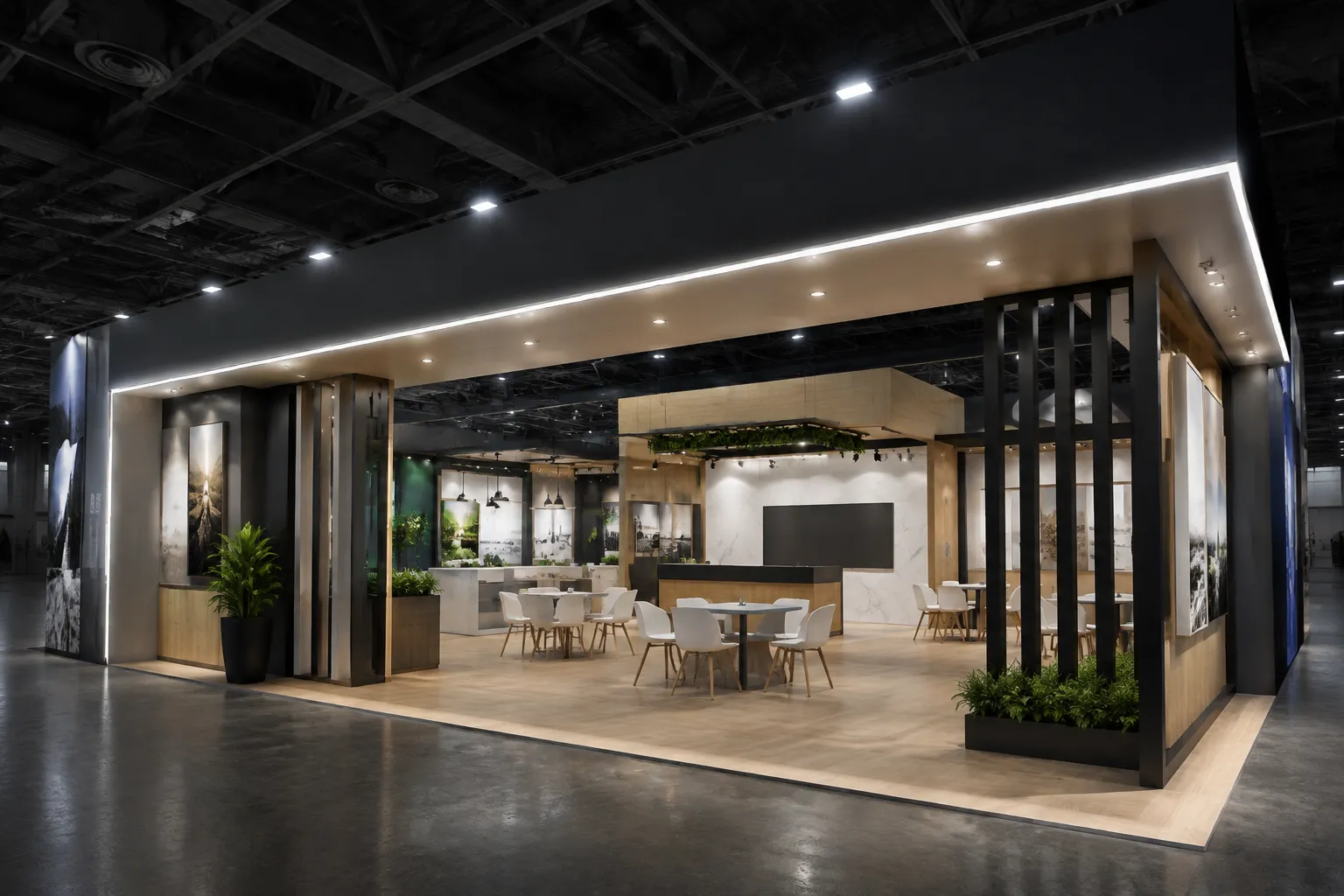
A useful concept handoff claim audit separates four layers:
- What the image visibly communicates.
- What the handoff explicitly documents.
- What remains an unresolved specification, rights, technical, or approval question.
- Which project role owns the next evidence or decision.
This is a review of claims and evidence, not a determination of buildability, compliance, accessibility, safety, venue acceptance, rights, or commercial performance.
Start With What the Preview Shows
Label the artifact according to its recorded review stage: concept preview, design option, presentation board, or another documented status. Do not infer a later stage from a polished render.
Read the image from the aisle first. Record what a visitor could recognize before reaching the stand:
- Where is the first focal point?
- Is the primary brand name visible?
- Which product, message, or activity receives attention?
- Does the zone threshold appear open, blocked, or ambiguous?
- Are meeting, demonstration, storage, and circulation areas distinguishable?
- Which sightline is represented, and which visitor positions are absent?
The image may communicate composition, apparent scale, graphic placement, material appearance, lighting intent, and visible spatial relationships. It may suggest how the stand could read from the represented visitor view.
The preview does not establish the dimensions behind the image, material properties, available services, venue conditions, installation method, asset permissions, or required approvals.
Production Readiness Cues Are Signals
Some visual and editorial cues make a concept appear more developed. Record them as signals of review depth, not as proof of release.
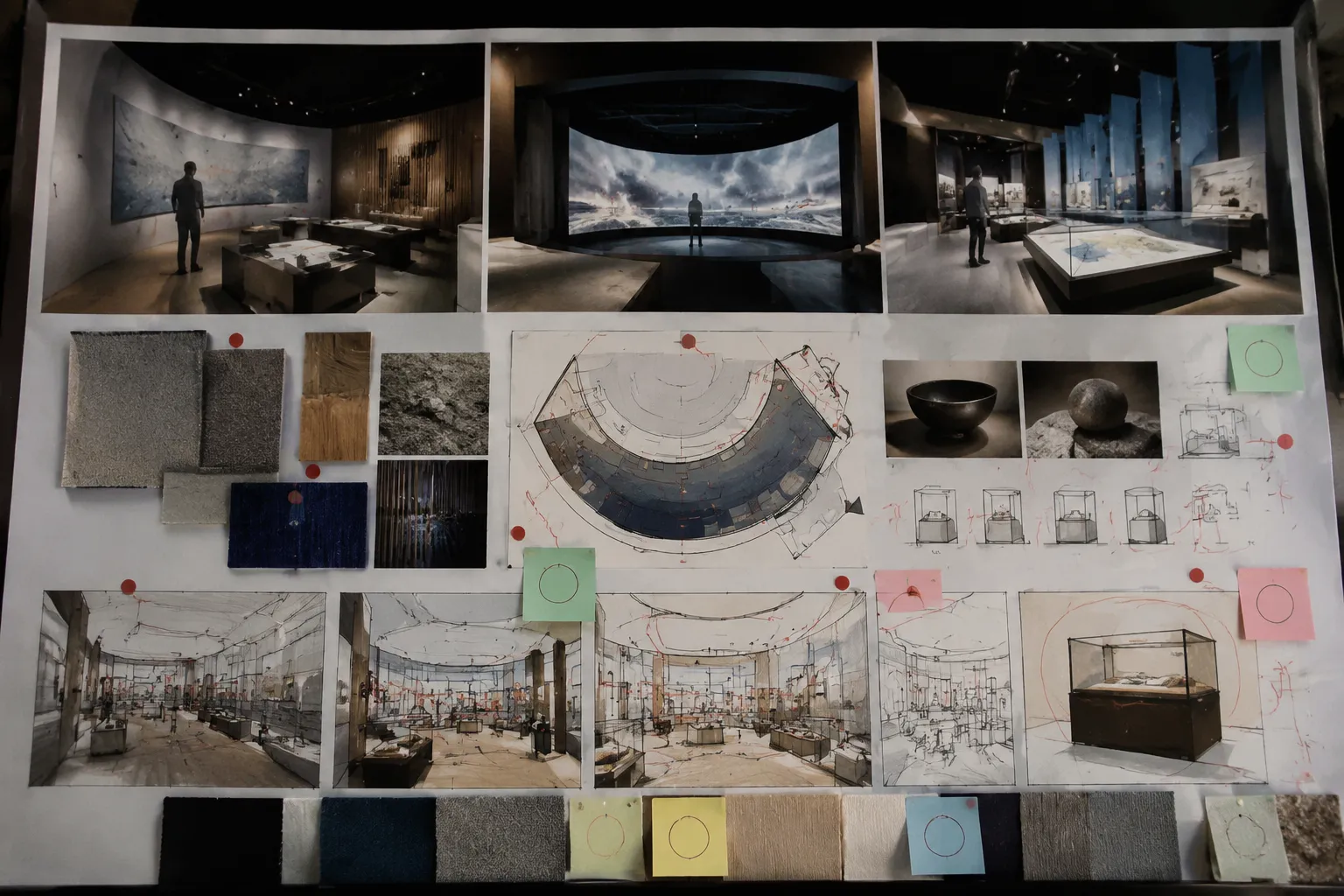
- Named zones with clear functions.
- A defined brand hierarchy.
- Consistent graphic locations across views.
- Apparent material changes between walls, counters, flooring, and suspended elements.
- A stated approach angle or visitor viewpoint.
- Dimension references or drawing identifiers.
- A revision label and review status.
- Notes identifying assumptions and open items.
A realistic timber finish may communicate warmth and weight. It does not confirm the selected product, treatment, supply route, fabrication method, or venue acceptance. A large overhead feature may establish a focal point in the image. It does not establish support, permitted height, rigging arrangements, or installation conditions.
Translate adjectives into visible decisions:
| Handoff language | Observable question |
|---|---|
| Open | Which threshold is open, from which approach angle, and because of what visible layout? |
| Premium | Which material, finish, proportion, lighting, or graphic treatment creates that impression? |
| Immersive | What does the visitor see, hear, touch, or move toward, and where is that represented? |
| Bold | Which scale, contrast, color, or focal point creates the emphasis? |
| Flexible | Which element changes, how does it change, and where are the options documented? |
Use a Claim Audit Table
Use one row for each production-related statement in the presentation, brief, drawing set, or review email. Match the claim to the wording actually used.
| Claim | Visible or documented basis | What remains unknown | Next evidence owner |
|---|---|---|---|
| “The stand is ready for fabrication.” | The preview shows resolved-looking zones and materials. | No confirmed specification package, revision status, or release record is identified. | Designer and appointed supplier |
| “The entrance is accessible.” | The image shows a clear threshold from one approach angle. | The preview does not establish route suitability, site conditions, or applicable requirements. | Qualified adviser, organizer, and supplier |
| “The overhead sign is approved.” | The sign is rendered above the stand. | No approval record, venue condition, support detail, or installation decision is shown. | Organizer and appointed supplier |
| “The product wall uses approved imagery.” | Brand imagery is visible on the wall. | Source, permission, territory, duration, and final asset status are unknown. | Rights holder or brand owner |
| “The meeting area fits the program.” | Tables and chairs are depicted. | Exact furniture, capacity, circulation, storage, and operating requirements are undocumented. | Project team and supplier |
Do not soften a direct statement into a visual impression. If the handoff says “ready for fabrication,” record that claim even when the image supports only a narrower observation. The difference is the item under review.
Check Matched Visitor Positions
A single hero view can hide unresolved relationships. Compare each option from the same visitor positions and at the same review stage.
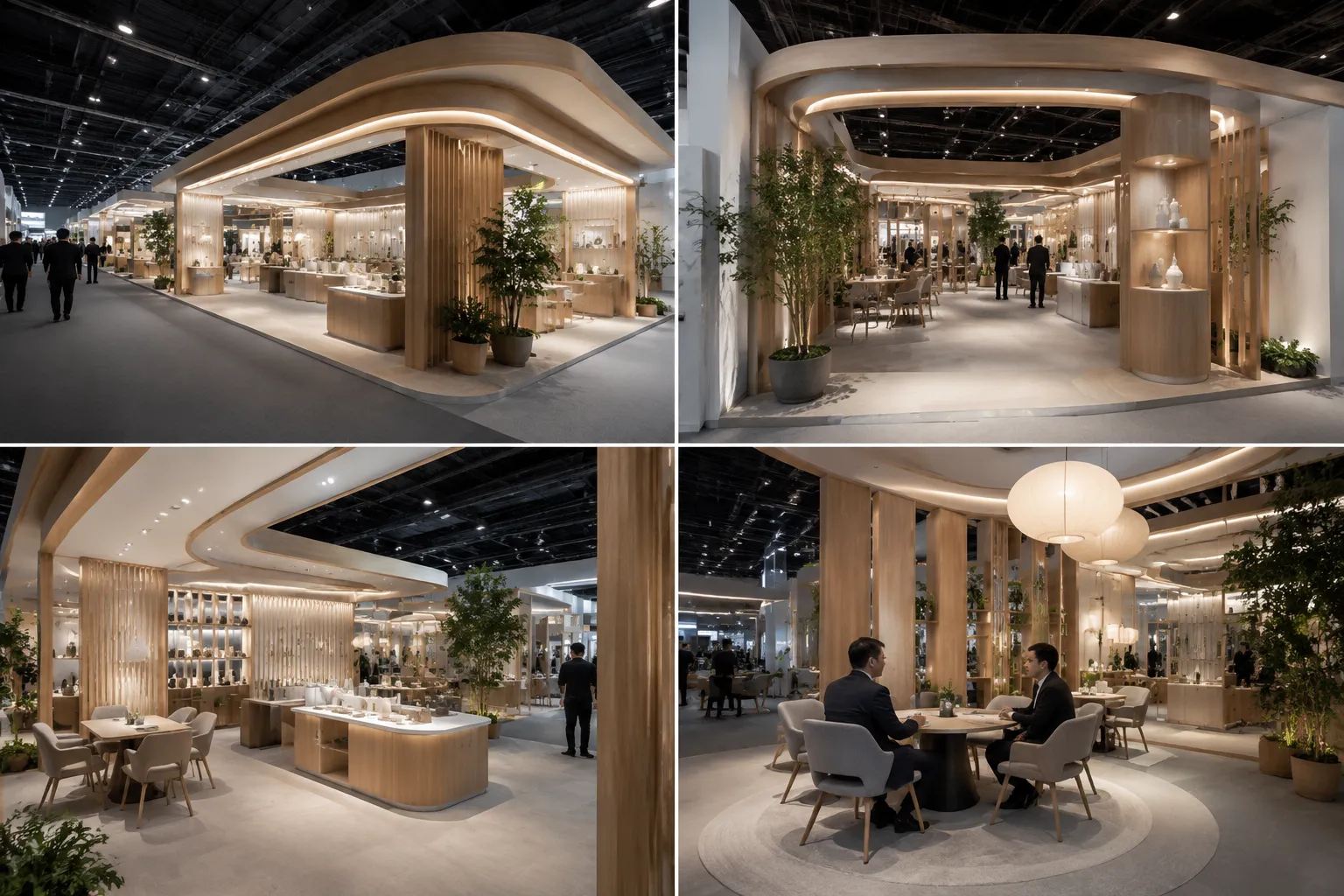
From the aisle
Inspect the first recognition moment: brand hierarchy, focal point, message scale, and apparent invitation into the stand. Note whether the view omits side approaches, neighboring stands, queueing, changing visitor flow, or competing visual information.
At the zone threshold
Inspect the transition into the demonstration, meeting, hospitality, or product area. Can the team identify where the zone begins and what action it appears to support?
A rendered boundary may look clear while its dimensions, circulation, privacy, and operational requirements remain undocumented. Route those questions into the brief.
At the demo edge
Inspect what a visitor standing beside the demonstration would see. Is the product or screen the focal point? Are presenters, equipment, storage, and audience positions represented?
The preview may depict a polished interaction without documenting the equipment list, power requirements, content status, or supplier coordination. Those belong in the next-stage review.
From the meeting approach
Inspect whether visitors can recognize the meeting destination and distinguish it from general circulation. A table behind a wall may suggest privacy, but the image does not establish acoustic performance, capacity, route suitability, or final furniture selection.
Separate Preview, Information, Specification, and Approval
Concept preview
This is a visual proposal. It communicates intent, appearance, and selected viewpoints.
- “The image shows...”
- “From this approach angle...”
- “The concept preview suggests...”
- “The board identifies...”
Documented information
This is information stated in the brief, notes, drawing schedule, asset list, or revision record. Look for named dimensions, material descriptions, zone functions, asset versions, drawing references, revision dates, assumptions, and open-item ownership.
A note confirms that the handoff states something. It does not confirm that the responsible party has accepted it.
Developed specification
This indicates that a more detailed technical or procurement record exists elsewhere. Identify that record rather than inferring its contents from the image.
Ask which document contains the specification, who owns its revision, which assumptions remain, which interfaces need coordination, and what changed since the previous review.
Approval or release
Approval is a separate project event. It requires a record from the responsible organizer, supplier, rights holder, client, or other appointed role. A rendered image, marked-up PDF, or positive review comment should not be described as approval unless the handoff records that status and its scope.
Inspect the Handoff Verbs
Compressed status language often hides the real review stage. Review words such as “confirmed,” “approved,” “final,” “released,” “ready,” and “cleared” against three questions:
- Confirmed by whom?
- Confirmed against which document or requirement?
- Confirmed for which scope and review stage?
Words such as “proposed,” “indicative,” “for discussion,” “to be confirmed,” and “subject to review” carry a different status. They can be appropriate, provided the affected item and next action remain visible.
Proposed overhead sign shown in the concept preview. Final height, support method, venue conditions, and approval status are unknown. The organizer and appointed supplier should identify the next evidence required.
This preserves the visual intent without turning it into a technical conclusion.
Record Unresolved Questions by Owner
Do not group every unknown under “TBC.” That label hides different responsibilities.
- Specification: What size, material, finish, equipment, or asset is intended?
- Interface: Which elements must coordinate with the venue, supplier, utilities, neighboring structures, or installed equipment?
- Approval: Which party must review or authorize the item?
- Rights: Who controls the image, logo, product content, or licensed asset, and what usage status is recorded?
- Revision: Which version is current, and what changed?
- Visitor view: Which approach angle, focal point, threshold, or sightline needs another view?
For each item, record the issue, current evidence, missing evidence, responsible role, next review stage, and status after the answer arrives.
Process references in systems engineering and formal project reviews use related methods: define the review question, match the review depth to the concern, record findings, assign actions, and close the record. These sources support review structure and traceability only. They do not provide exhibition-specific requirements or determine whether a stand can be built or approved.
Worked Example: “Production-Ready Direction”
Example scenario: A concept board shows a freestanding stand with a suspended brand sign, a product demonstration counter, two meeting tables, and printed wall graphics. The accompanying note says, “Production-ready direction for supplier pricing.”
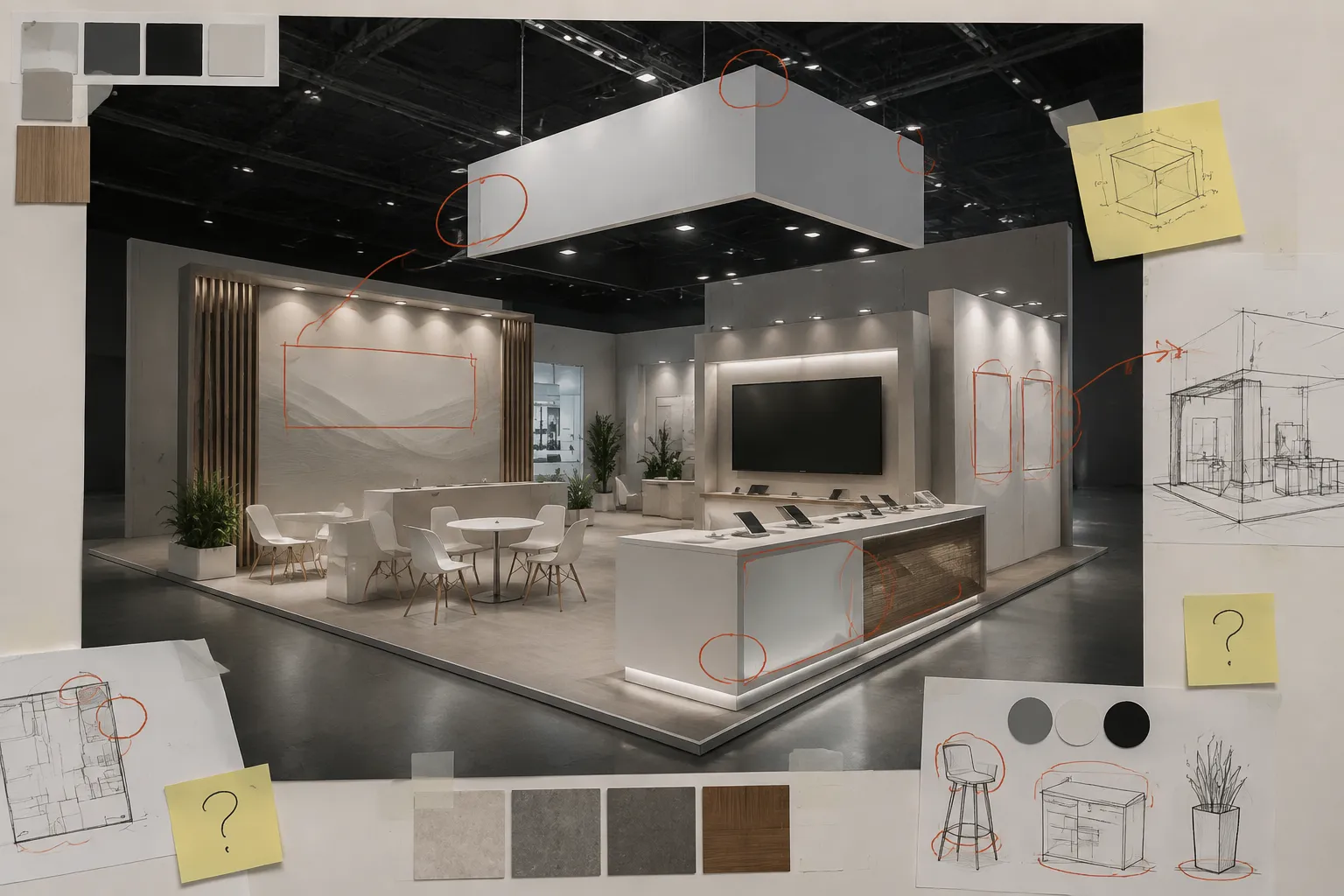
From the aisle, the suspended sign creates the strongest focal point. The product counter is visible from the represented front approach, while the meeting area is recognizable but partly screened. The board does not show a side approach or rear service area.
The wording adds a second review layer:
- “Direction” suggests an intended route, not necessarily a released specification.
- “For supplier pricing” indicates a planning purpose, but does not identify the pricing basis.
- “Production-ready” is a broad claim whose scope remains undefined.
Ask which dimensions and quantities the supplier should price, whether materials are selected or indicative, where suspended-sign details are documented, which graphics are final assets, and which venue questions remain open.
The narrow conclusion is clear: the board communicates a developed visual direction and gives a supplier something to review. The image alone does not establish release, venue acceptance, technical suitability, or rights status.
The Next Action
Mark every phrase in the current concept board that implies readiness, approval, confirmation, clearance, or finality. For each phrase, add:
- Visible basis: What can the image actually show?
- Documented basis: Which record supports the statement?
- Next evidence: Who must provide or confirm what is missing?
Return the marked handoff to the designer and project lead. Ask them to replace broad status language with a defined review stage, named open items, and an owner for each unresolved question. Technical, legal, venue, accessibility, safety, and approval determinations must then move to the appointed supplier, organizer, rights holder, or qualified adviser.